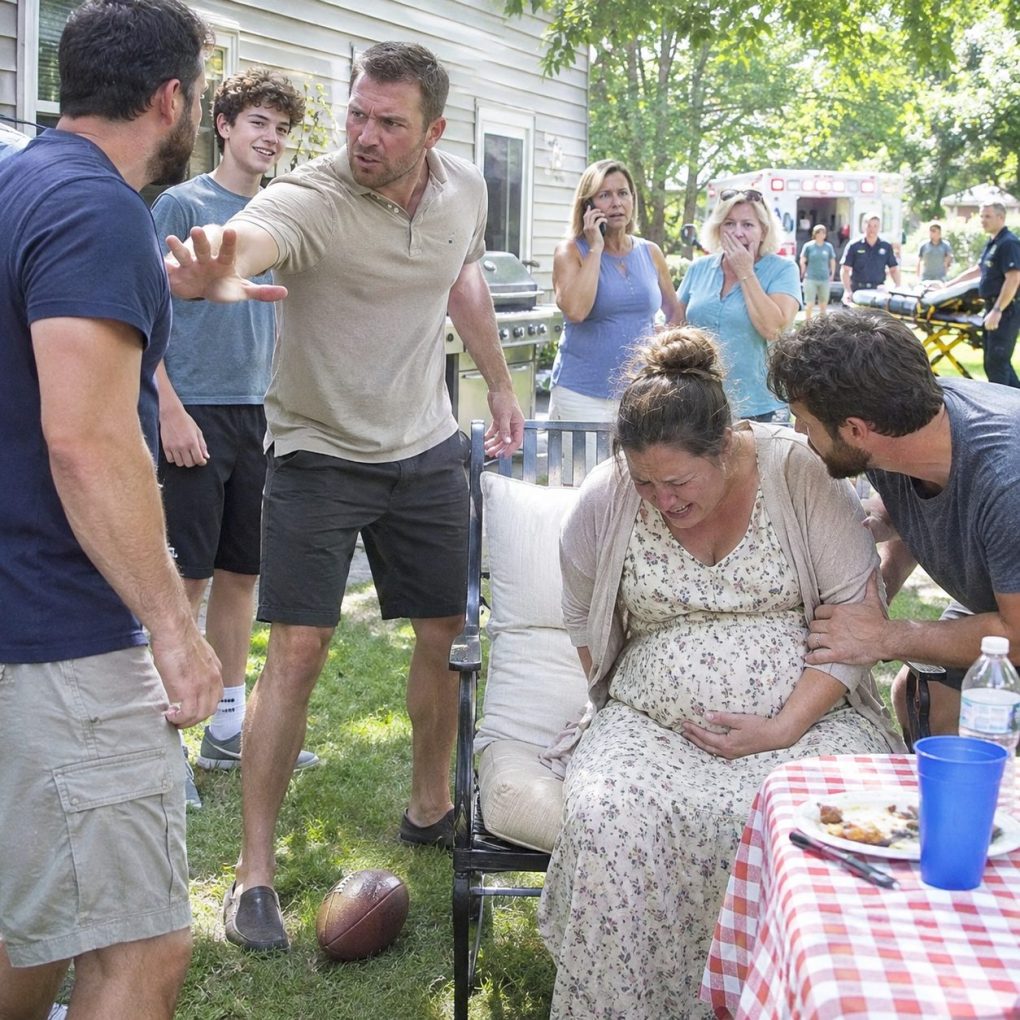
Later that afternoon, Grace felt the baby move. She cried without sound, one hand covering her mouth while the other pressed against the spot where the little foot nudged her. I leaned my forehead against hers, careful of the wires between us.
We still had to wait for the doctors’ clearance. I used the time to download the monitor’s original recordings and preserve the messages. The camera had been running long before Mason kicked the ball.
At 4:21 p.m., while Grace was cutting vegetables in the kitchen, it recorded Owen whispering to his son near the bookshelf.
Mason said, “But she’s pregnant.”
Owen answered, “Then she’ll finally understand what it feels like to be scared.”
And what he told Mason to do next made me realize this hadn’t begun as a game.
The video showed Owen leaning close to Mason while Grace prepared the snacks.
“Kick it toward her chair,” he said. “Make her jump. She needs to learn not to interfere when grown men are talking money.”
Mason stared at the ball. “What if I hit her?”
“You won’t. Just make a point.”
But he had hit her. And when Grace doubled over, Owen had demanded an apology from the woman he’d helped put in danger.
I sent the complete recording to the officer investigating the incident. I didn’t post it online or send it to every relative. Grace deserved medical care and privacy, not an audience.
On the second evening, her contractions settled. After further monitoring and discharge instructions about warning signs, her obstetrician allowed her home. We slept with the hospital paperwork on the nightstand and the overnight bag still packed by the door.
Grace didn’t want Owen, Mason, or my mother inside our house.
“I keep hearing him laugh,” she said one night, holding the little yellow blanket against her chest. “And I keep seeing your mom pick up those crackers.”
I sat beside her. I couldn’t tell her to forget, or promise that everything would be fine. I could only say, “They aren’t coming back.”
Police interviewed the family and reviewed the recording. Mason acknowledged deliberately kicking toward Grace after his father encouraged him. The county handled his case through a juvenile diversion program that required counseling and community service. Owen was investigated, but the prosecutor did not pursue a separate criminal charge against him on the available evidence.
There were still consequences he couldn’t argue away. We refused the loan, ended contact, and told our parents we wouldn’t attend gatherings where he was present. His shop downsized after a lender declined additional financing. I felt no satisfaction watching him lose what he’d been so desperate to protect.
Mom came to our porch in January carrying a casserole. She stood outside when I asked her to.
“I thought if everyone stayed calm, it would pass,” she said.
“Grace was asking for help. You were cleaning the floor.”
Mom looked down at the dish in her hands. Then she put it on the step and said, “I should have called for help.”
It was the first time she hadn’t defended Owen. It wasn’t enough to restore trust, but it was an honest beginning.
Mason wrote Grace a letter through his counselor. He said his father had convinced him she was taking away his chance to work at the shop, and that he’d wanted to hurt her feelings, not the baby. He didn’t ask us to forgive him. Grace put the letter in a drawer and said she might answer someday.
In March our daughter, Lucy, was born healthy. The first time I held her, Grace pulled the yellow blanket across both of them and closed her eyes. I remembered the hospital monitor, its green line moving steadily across the screen while we waited to know if she’d be safe.
A week later, I moved the soccer ball we’d forgotten in the garage to the donation pile. Grace saw it, paused, and shook her head.
“Throw that one away,” she said.
I did.
Then I came back inside, where she was feeding Lucy in the morning light. No one was keeping score. No one was asking her to apologize.
There was only the soft sound of our daughter swallowing, and Grace’s hand reaching for mine.





